Lost in Kyoto’s Cityscape? Here’s How to Find the Real Magic
Kyoto’s cityscape is a quiet symphony of tradition and modern life—wooden machiya houses whisper history, while neon signs flicker in the evening mist. I wandered its streets with no map, just curiosity, and discovered how deeply atmosphere shapes a place. This isn’t just about sightseeing; it’s about feeling the rhythm of a city that honors its past without being trapped by it. Let me show you the Kyoto that most tourists miss. More than a destination, Kyoto is an invitation to slow down, to notice the way light filters through bamboo groves, how silence pools in alleyways, and how centuries seem to fold into a single breath. It’s a city where the urban fabric feels alive, not because of noise or speed, but because of its deep-rooted harmony between people, nature, and time.
Arriving in Kyoto: First Impressions of a City Between Eras
The first thing you notice when arriving in Kyoto is the absence of what you’d expect in a major city—no forest of skyscrapers, no blaring billboards, no relentless verticality. Instead, the skyline is gently undulating, defined by tiled rooftops, temple spires, and the distant outline of the Higashiyama mountains. Unlike Tokyo’s electric density or Osaka’s bold modernity, Kyoto feels contained, almost protective of its scale. This is no accident. For decades, strict building regulations have limited construction height, ensuring that no structure overshadows the city’s historic landmarks or obstructs sacred views of the surrounding hills. The result is a skyline that breathes, where the horizon remains soft and the human scale is preserved.
Early morning in Kyoto offers a particularly vivid introduction to this balance. As dawn breaks, the city is bathed in a pale gold light that glides across the curved eaves of temples like Kiyomizu-dera and Nanzen-ji. Mist curls around the stone lanterns in Maruyama Park, and the air carries the faint scent of moss and incense. Even in areas with modern buildings, the materials—wood, stone, and muted concrete—blend rather than clash. This visual continuity is intentional. Urban planners in Kyoto have long prioritized aesthetic harmony over commercial expediency, recognizing that the city’s soul lies not in growth, but in preservation. The absence of visual chaos allows visitors to settle in, to absorb the environment rather than fight against it.
What makes Kyoto’s cityscape so restful is not just its physical design, but the psychological effect of its restraint. In a world where cities compete to be taller, brighter, and faster, Kyoto chooses quiet dignity. Its streets don’t shout for attention; they invite contemplation. For the traveler, especially one accustomed to urban overload, this can feel like a kind of healing. The city doesn’t demand your energy—it gives it back. This first impression of calm, of order woven with nature, sets the tone for everything that follows. It’s a city that asks you to look closely, to walk slowly, and to let the details reveal themselves over time.
The Soul of the Streets: Machiya, Alleys, and Hidden Courtyards
At the heart of Kyoto’s urban character are the machiya—traditional wooden townhouses that have shaped the city’s residential streets for over 400 years. These narrow, deep buildings, often just a few meters wide but stretching far back from the street, were originally homes for artisans and merchants during the Edo period. Today, many have been restored and repurposed as guesthouses, teashops, or craft studios, but their essential form remains unchanged. With their latticed wooden facades, tiled roofs, and distinctive “eel beds” layout, machiya are more than architectural relics—they are living elements of Kyoto’s identity.
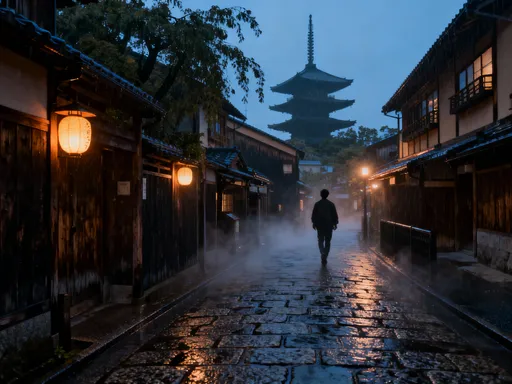
Walking through neighborhoods like Sannenzaka, Ninenzaka, or Gion, you begin to appreciate how these structures create a unique urban rhythm. The narrow streets are shaded by overhanging eaves, and the quiet is broken only by the rustle of leaves or the distant chime of a temple bell. Behind unassuming doors, many machiya open into small inner gardens—carefully composed spaces of moss, stone, and carefully pruned shrubs. These gardens are not for display but for contemplation, offering a moment of stillness within the home. The design reflects a philosophy of balance: privacy is maintained through the building’s depth, while connection to nature is nurtured through glimpses of green and sky.
What’s remarkable is how well-preserved these areas remain. Unlike cities where modernization has erased the old, Kyoto has enforced strict preservation laws, particularly in designated historic districts. Buildings cannot be demolished or drastically altered without approval, and new constructions must adhere to traditional materials and proportions. This commitment ensures that entire blocks retain their 18th-century feel, even as life moves forward within them. For visitors, strolling these lanes is like stepping into a living museum—one where the exhibits are not behind glass, but part of daily life. You might pass a woman arranging flowers in a doorway, or hear the soft clink of tea bowls from a family breakfast. There’s no performance for tourists; this is simply how Kyoto lives.
Temples as Urban Anchors: How Sacred Spaces Shape the Skyline
In Kyoto, temples are not isolated destinations tucked into quiet corners—they are woven into the very fabric of the city. Their golden roofs, wooden pagodas, and stone gates rise unexpectedly between residential blocks, serving as both spiritual centers and visual anchors. Kinkaku-ji, the Golden Pavilion, gleams at the edge of a reflective pond, its image mirrored in the water like a dream. To-ji, with its towering five-story pagoda, stands just minutes from Kyoto Station, a powerful reminder of the city’s Buddhist roots amidst modern transit. These sacred spaces are not set apart from life; they are part of it, shaping how people navigate and experience the city.
The placement of temples was never arbitrary. Many were built in alignment with natural features—the flow of rivers, the curve of mountains—as part of a broader cosmology that saw harmony between the human and spiritual worlds. Kiyomizu-dera, perched on a hillside in Higashiyama, was constructed to face east, welcoming the sunrise and symbolizing renewal. Its wooden stage, jutting over the treetops, offers not just a view of the city, but a vantage point for reflection. From here, you can see how the city spreads out like a tapestry, with temple roofs peeking through the canopy. These landmarks serve as orientation points, helping residents and visitors alike find their way without relying solely on maps or signs.
But their role goes beyond navigation. The presence of temples infuses daily life with a sense of continuity and reverence. Even in busy districts, the sound of temple bells at dawn and dusk marks the passage of time. Seasonal festivals, such as the Gion Matsuri, originate from temple traditions and draw entire neighborhoods into shared celebration. The architecture itself—crafted from wood, designed to age gracefully—reflects a philosophy of impermanence and respect for nature. For the mindful traveler, visiting a temple is not just a photo opportunity; it’s a chance to pause, to breathe, and to feel the weight of centuries in a single moment of stillness.
Green Threads: Parks, Gardens, and the Breathability of Kyoto
One of Kyoto’s most defining qualities is its abundance of green space—not sprawling parks in the Western sense, but carefully composed gardens, riverbanks, and wooded pathways that thread through the city like veins. Maruyama Park, located near the Gion district, is one of the most beloved. In spring, it becomes a sea of cherry blossoms, with families gathering under the pink canopies for quiet picnics. But even in autumn or winter, the park retains its charm, with maple trees turning crimson and the iconic weeping cherry standing like a silent guardian. It’s a place where locals come to walk, rest, and reconnect with nature without leaving the city center.
Then there is the Philosopher’s Path, a stone walkway that follows a canal lined with hundreds of cherry trees. Named after the early 20th-century philosopher Nishida Kitaro, who reportedly meditated here during his daily walks, the path offers a contemplative journey through changing seasons. In spring, the blossoms form a tunnel of soft pink; in fall, the leaves burn in shades of orange and red. But even on an ordinary Tuesday morning, the path feels sacred—not because of grandeur, but because of its quiet rhythm. The water murmurs beside you, a heron might stand motionless in the reeds, and the only sounds are footsteps and distant temple chimes.
This integration of nature is not accidental. It reflects a deep-rooted aesthetic principle known as “ma”—the value of negative space, of emptiness as a form of presence. In Japanese garden design, every rock, every raked line in the gravel, is balanced by what is left open. This concept extends to urban planning: Kyoto’s streets are not packed wall-to-wall with buildings. There are gaps—courtyards, small shrines, hidden gardens—that allow the city to breathe. These green threads are not just decorative; they serve a psychological function, offering relief from sensory overload and creating pockets of calm. For the visitor, they provide a rhythm—moments of pause between temples, markets, and teahouses. In a world that often feels too full, Kyoto teaches the beauty of space, of silence, of simply being.
Nightscapes That Don’t Shout: Kyoto’s Subtle After-Dark Charm
When night falls, Kyoto transforms—but not in the way you might expect. There are no dazzling light shows, no neon rivers pulsing through the streets. Instead, the city dims, settling into a mood of quiet elegance. Most buildings remain unlit, their outlines softened by darkness. What illumination there is comes from warm, low-intensity sources: the amber glow of paper lanterns outside ryokan and tea houses, the gentle lighting of temple gates, or the flicker of candles in riverside restaurants along Pontocho Alley.
Pontocho, a narrow lane running parallel to the Kamo River, is one of the best places to experience Kyoto after dark. Just wide enough for two people to walk side by side, the alley is lined with centuries-old wooden buildings housing intimate dining establishments. At dusk, the river reflects the candlelight from the restaurants, creating a shimmering pathway of gold. Conversations drift through open windows, soft and unhurried. The air carries the scent of grilled fish and sake. There’s no loud music, no crowds jostling for attention—just a sense of intimacy, of life unfolding at a human pace.
This restraint in lighting is not just aesthetic; it’s cultural. Kyoto values subtlety, and its nightscapes reflect that. Unlike cities that try to stay awake all night, Kyoto embraces the idea of rest. Many shops close by 8 or 9 p.m., and the streets grow still. This isn’t a city that performs for tourists after dark—it simply continues its own rhythm. For the visitor, this can be a revelation. Walking through Gion or Nakagyo in the evening, you might see a geiko in full regalia gliding toward an ochaya, or hear the faint sound of a shamisen from behind a closed door. These moments aren’t staged; they’re part of a living tradition. The darkness doesn’t hide the city—it reveals a different layer of its soul, one that values discretion, grace, and the quiet beauty of what is not said.
Getting Around Like a Local: Walking, Biking, and the Rhythm of Discovery
To truly experience Kyoto, you must move through it slowly. The city resists the tourist’s urge to check off landmarks in a single day. Its magic lies in the in-between moments—the alley you wander down by chance, the garden you glimpse through a half-open gate, the old man tending bonsai in his courtyard. For this kind of discovery, the best modes of transportation are your feet or a bicycle.
Walking is perhaps the most rewarding way to explore. Kyoto’s central districts—Higashiyama, Gion, Arashiyama—are compact and pedestrian-friendly. The streets are narrow, often cobbled, and designed for strolling rather than rushing. As you walk, you begin to notice details: the texture of moss on a stone wall, the way light falls through a paper screen, the seasonal decorations in shop windows. There’s no need for a strict itinerary. Let curiosity guide you. Turn down a side street. Pause at a small shrine. Sit on a bench and watch the world pass by. This is how locals experience their city—not as a list of attractions, but as a series of quiet encounters.
Biking offers a broader range, allowing you to reach quieter neighborhoods like Ohara, Yamashina, or the northern hills of Takagamine. Renting a bicycle is easy and affordable, with shops near major stations offering sturdy, comfortable models. Cycling through Arashiyama’s outskirts, you might pass rice fields, small temples, and family-run farms. The pace is gentle, the air fresh. Unlike tourist buses that deposit you at crowded sites, a bike lets you explore at your own rhythm, stopping whenever something catches your eye. And when you return the bike, you’ll feel not just the satisfaction of distance covered, but a deeper connection to the city’s pulse.
Public transportation complements these slower modes. Kyoto’s bus system is extensive and efficient, with clear signage and English announcements on major routes. The subway, though limited to two lines, connects key areas like Kyoto Station and downtown. But the real benefit of public transit here is that it doesn’t make exploration too easy. You still have to walk from the stop, still have to navigate streets without GPS precision. That slight friction—the need to pay attention, to read signs, to ask for directions—is part of the journey. It keeps you present, engaged, and open to surprise.
Avoiding the Crowds While Staying Centered: Smart Timing and Mindful Routes
Kyoto is one of Japan’s most visited cities, and some of its iconic sites—Fushimi Inari Shrine, Kiyomizu-dera, the Arashiyama Bamboo Grove—can be packed with tourists, especially during peak seasons. But with a little planning and mindfulness, it’s entirely possible to experience these places with peace and presence.
The key is timing. Visit Fushimi Inari at dawn, when the thousands of red torii gates are bathed in soft morning light and the crowds are still asleep. Walk the path up the mountain with only the sound of birds and your own footsteps. At Kiyomizu-dera, arrive just after opening or an hour before closing. The midday rush will have passed, and you’ll have space to stand on the wooden stage, look out over the city, and simply breathe. Even the Arashiyama Bamboo Grove is serene early in the morning, when the light filters through the towering stalks and the air is cool and still.
But beyond timing, the real secret is balance. Don’t try to see everything. Instead, pair must-see sites with quieter, lesser-known neighborhoods. Kamigamo, in the city’s north, is home to one of Kyoto’s oldest shrines, nestled beside the Kamo River. The area is residential, peaceful, and rich with seasonal beauty—plum blossoms in winter, fresh green leaves in spring. Tanukicho, near Nishiki Market, is a narrow lane of tiny bars and eateries beloved by locals. It’s not polished or photogenic in the typical sense, but it’s alive with authenticity. Here, you might share a table with a Kyoto native, hear stories in broken English and warm smiles, and taste food made with care, not for show.
The goal isn’t to avoid tourists altogether, but to stay centered in your own experience. Mindful travel means being present, not performative. It means choosing depth over breadth, stillness over speed. When you move through Kyoto with this intention, the city reveals itself not as a checklist, but as a companion—one that walks with you, teaches you, and stays with you long after you’ve left.
Conclusion: Why Kyoto’s Cityscape Stays With You Long After You Leave
Kyoto’s cityscape endures in memory not because of any single temple or garden, but because of the feeling it creates—a sense of harmony, of balance, of quiet depth. It’s a city that doesn’t impress through scale or spectacle, but through subtlety and care. Every element—from the low-rise buildings to the preserved machiya, from the temple spires to the hidden gardens—contributes to an urban experience that feels intentional, respectful, and deeply human.
What lingers after your visit is not just the image of golden roofs or cherry blossoms, but the rhythm of the place—the way time slows, the way silence speaks, the way beauty is found in restraint. Kyoto teaches us that a city can be modern without losing its soul, that progress doesn’t have to mean erasure. It invites us to travel not just with our eyes, but with our senses, our hearts, our full attention.
And perhaps most importantly, it reminds us that the world is still full of places that value stillness, that honor the past, and that believe in the power of a well-placed stone, a single beam of light, a quiet alley at dusk. Kyoto doesn’t shout. It whispers. And if you listen closely, you’ll carry its voice with you—not just in photographs, but in the way you see the world long after you’ve returned home. Let this be your invitation: to return to Kyoto, and to return to the practice of mindful seeing, wherever you are.