Skyline Vibes and Cobblestone Streets: My Boston Check-In
Walking through Boston feels like stepping into a living postcard—where historic brick buildings clash perfectly with sleek glass towers. I checked in not just to a city, but to a skyline that tells stories. From the Charles River’s reflective glow to the bustling energy of Downtown, Boston’s cityscape blends old-world charm with modern pulse. This is urban beauty with soul, and you’re about to see it through my eyes. More than just a destination, Boston offers a layered experience where every street corner, bridge, and riverside path reveals a new angle of its identity. It’s a city that invites you to slow down, look up, and truly absorb the rhythm of place.
First Impressions: Arriving in Boston After Dark
There is something uniquely compelling about arriving in Boston after sunset. As the Tobin Bridge carries visitors over the Mystic River into the city, the skyline begins to emerge—first as a scattered constellation of lights, then as a defined silhouette against the night sky. The transition from highway to urban landscape feels like crossing a threshold into a different era, where colonial history and 21st-century innovation coexist in striking harmony. Along Storrow Drive, the city unfolds in a cinematic sweep: the illuminated spire of the Custom House Tower, the twin peaks of the Prudential Center, and the shimmering glass facade of the John Hancock Tower stand as modern sentinels, while the low, red-brick profiles of Beacon Hill whisper of centuries past.
The Zakim Bridge, with its cable-stayed design and soft white lighting, serves as both a functional artery and a symbolic gateway. Its elegant lines frame the skyline in a way that feels almost intentional, as if guiding the eye toward the city’s core. From this vantage, Boston does not overwhelm with scale—unlike some larger metropolises—but instead offers a human-scaled skyline that feels accessible and intimate. The mix of architectural styles is not accidental; it reflects decades of thoughtful urban development that honors preservation while embracing growth. Even at night, the city feels curated, not chaotic, with each lighted window telling a quiet story of life in motion.
What makes this first impression so powerful is not just the visual contrast, but the emotional resonance it creates. There is a sense of arrival, yes, but also of continuity. The city does not feel like it was built for tourists or transients; it feels lived-in, resilient, and quietly proud of its layered identity. For those checking in for the first time, or returning after years away, this nighttime approach sets the tone: Boston is not a city to be rushed through, but one to be experienced slowly, with attention to detail and an openness to discovery.
The Charles River Edge: Where Nature Meets the Skyline
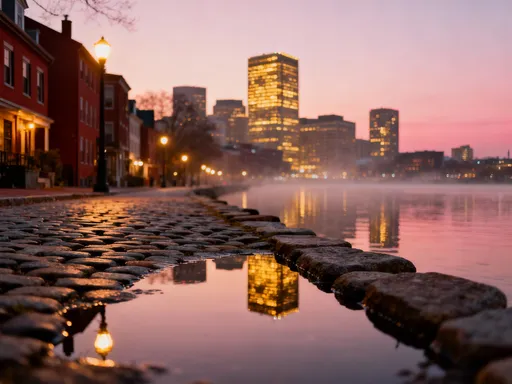
One of Boston’s most defining features is the Charles River, a natural ribbon that separates the city from Cambridge and serves as a living mirror to its skyline. Along the Charles River Esplanade, the city reveals itself in reflection—glass towers doubling in the water, sailboats gliding past the silhouette of Back Bay, and the golden glow of streetlamps tracing the curve of the shoreline. This is where urban energy meets tranquility, and where the city’s architectural ambitions are softened by nature’s quiet presence. The Esplanade is more than a park; it is a corridor of connection, linking neighborhoods, offering recreation, and providing some of the most breathtaking views in the Northeast.
Walking or biking along the path from Boston University to the Hatch Shell, visitors encounter a dynamic panorama that changes with the hour. At sunrise, the river is often still, capturing a perfect mirror image of the skyline. By midday, sunlight dances across the waves, breaking the reflection into shimmering fragments. At sunset, the western-facing buildings catch fire in hues of amber and rose, casting long shadows across the water. The Harvard Bridge, with its distinctive MIT-designed markers in meters and feet, offers a raised vantage point where the full breadth of the cityscape comes into focus—Back Bay’s church spires, the Prudential Center’s illuminated crown, and the modern profile of the Seaport District in the distance.
Boston University Beach, though modest in size, is a beloved local spot where students and families gather to relax with a view. It is here that the city feels most approachable—where you can sit on the grass, sip coffee from a paper cup, and watch the world go by. The riverbanks are designed for access, not spectacle, with benches, bike racks, and open lawns that invite lingering. Unlike more manicured waterfronts in other cities, the Charles retains a sense of authenticity, where joggers, kayakers, and dog walkers coexist in a shared rhythm. This balance between beauty and utility is central to Boston’s appeal—it is a city that values both grandeur and practicality.
Beacon Hill and the Freedom Trail: Old Boston’s Living Facade
If the Charles River showcases Boston’s modern skyline, Beacon Hill reveals its soul. This historic neighborhood, with its narrow, gaslit streets and Federal-style row houses, feels like a preserved chapter from the 19th century. The red-brick facades, black iron railings, and flower boxes in season create a streetscape that is instantly recognizable and deeply atmospheric. Walking along Acorn Street, often cited as one of the most photographed streets in the United States, is like stepping into a sepia-toned photograph—except here, life continues in full color. Residents come and go, café doors swing open, and children ride bikes down the cobblestones, proving that history in Boston is not behind glass, but part of daily life.
Beacon Hill is more than a picturesque enclave; it is a testament to the city’s commitment to preservation. Unlike cities that have razed historic districts for development, Boston has chosen to maintain its architectural heritage, integrating it into the modern urban fabric. The Massachusetts State House, with its gilded dome visible from multiple points in the city, anchors the neighborhood and serves as a constant reminder of Boston’s role in American history. Along the Freedom Trail, a 2.5-mile red line embedded in the sidewalk guides visitors through 16 sites of national significance, from the Paul Revere House to the Old North Church. This trail does not treat history as a static exhibit—it weaves it into the present, allowing past and present to coexist in conversation.
What makes Beacon Hill so impactful is its scale. The buildings are low, the streets are narrow, and the pace is slow. This human dimension contrasts sharply with the verticality of downtown, offering a counterpoint that enriches the overall cityscape. It is a reminder that Boston’s identity is not defined by its tallest buildings, but by its ability to balance growth with continuity. For visitors, walking this neighborhood is not just a sightseeing activity—it is an emotional experience, a chance to feel the weight of time and the resilience of place.
Sky-High Views: Checking In from Above
To understand Boston’s layout, one must see it from above. While the city is compact compared to other major American cities, its density and diversity become most apparent when viewed from elevation. Though the Top of the Hub restaurant at the Prudential Center closed in 2020, Boston still offers several accessible high-rise viewpoints. The observation deck at the Boston Convention and Exhibition Center in the Seaport, while less known, provides a sweeping view of the harbor and downtown skyline. Rooftop bars like Lookout Rooftop Bar at the Envoy Hotel have become popular for their panoramic vistas, especially at twilight when the city transitions from day to night.
From these elevated perspectives, the city’s structure comes into focus. The grid of Back Bay, laid out in the 19th century on reclaimed marshland, contrasts with the organic, winding streets of the North End and the waterfront orientation of the Seaport. The Charles River acts as a natural divider, its curve shaping the city’s development on both banks. At night, the illumination of key landmarks—the golden dome of the State House, the blue lights of the Zakim Bridge, the rotating beacon atop the Custom House Tower—creates a constellation that guides the eye across the urban landscape. These lights are not just decorative; they are navigational, historical, and symbolic.
Daytime views offer a different kind of clarity. From a high floor of a downtown office building or a public atrium like the one at 100 Federal Street, one can see the patchwork of neighborhoods, the mix of old and new architecture, and the green oases of the Public Garden and Commonwealth Avenue Mall. The city’s vertical growth is concentrated in specific zones—Downtown, Back Bay, and the Seaport—leaving other areas intentionally low-rise. This intentional density prevents visual overload and maintains a sense of openness, even in the heart of the city. For visitors, these sky-high moments are not just about taking photos—they are about gaining perspective, literally and figuratively, on how Boston fits together.
Neighborhood Contrasts: From the Seaport’s Glass Giants to Southie’s Grit
Boston’s cityscape is defined by contrast, and nowhere is this more evident than in the juxtaposition of the Seaport District and South Boston. The Seaport, once a neglected industrial waterfront, has been transformed into a district of glass towers, luxury apartments, and tech campuses. Its skyline is modern, bold, and unapologetically futuristic. Buildings like the Innovation and Design Building, one of the largest LEED-certified office spaces in the country, reflect the city’s shift toward innovation and sustainability. The I-90 tunnel extension and new bridges have made the area more accessible, turning what was once isolated into a thriving urban hub.
Just a short walk away, South Boston—affectionately known as Southie—maintains a more grounded, residential character. Tree-lined streets, triple-decker houses painted in classic New England colors, and neighborhood corner stores define the area. The architecture here is modest, functional, and deeply rooted in community. While the Seaport feels curated and global, Southie feels lived-in and local. This contrast is not a flaw but a strength, illustrating Boston’s ability to evolve without erasing its identity. The two neighborhoods coexist, not in competition, but in dialogue—one looking forward, the other holding on to tradition.
Urban planning in these areas reflects different priorities. The Seaport emphasizes walkability, mixed-use development, and public art installations, with wide sidewalks and open plazas designed to encourage gathering. Southie, by contrast, grew organically over time, with small parks, churches, and schools serving as community anchors. Both have their charms and challenges. The Seaport can feel impersonal at times, with its corporate sheen and high-end retail, while Southie grapples with the pressures of gentrification. Yet together, they represent the full spectrum of Boston’s urban life—a city that values progress but remains deeply connected to its neighborhoods.
Hidden Angles: Offbeat Spots with Iconic Views
Beyond the postcard panoramas and tourist hotspots, Boston offers quieter, more intimate vantage points known primarily to locals. These hidden angles reveal the city in unexpected ways, stripping away the noise and allowing for moments of genuine connection. One such spot is the footbridge near North Station, just behind the TD Garden. From this unassuming pedestrian walkway, the skyline unfolds in layers—the Zakim Bridge in the foreground, the towers of downtown rising behind, and the river connecting them all. It is a favorite among photographers, especially at blue hour, when the sky shifts from dusk to night and the city’s lights begin to glow.
Piers Park in East Boston offers another overlooked perspective. Located across the harbor, this green space provides a waterfront view of the skyline that feels both expansive and serene. With benches facing west, it is an ideal spot to watch the sunset over downtown. The park’s location, accessible by the free MBTA ferry from Long Wharf, makes it a peaceful escape from the city’s pace. Similarly, the green space behind MIT, near the end of Memorial Drive, offers a secluded vantage where the city appears framed by trees and the river’s curve. It is here that the skyline feels less like a monument and more like a living, breathing entity.
These locations are not marked on every map, nor do they have gift shops or ticket lines. They are discovered through word of mouth, curiosity, or simply wandering with intention. They represent a different way of experiencing Boston—one that values stillness over spectacle, observation over consumption. For those willing to look beyond the obvious, the city rewards with moments of quiet beauty and personal discovery.
Practical Tips for Experiencing Boston’s Cityscape Like a Local
To truly appreciate Boston’s cityscape, timing and preparation matter. The golden hour—shortly after sunrise or before sunset—offers the most flattering light for photography and sightseeing. During these times, the city’s brick and stone facades warm under the sun, and the river becomes a mirror of fire and gold. The blue hour, just after sunset, is equally magical, when artificial lights begin to dominate and the skyline transitions into its nighttime persona. Planning walks or bike rides around these times enhances the experience significantly.
Transportation in Boston is best approached with a combination of walking, biking, and public transit. The MBTA, commonly known as the T, connects all major neighborhoods and is especially useful for reaching areas like the Seaport or East Boston. Biking the Esplanade is a popular choice, with rental options available through Bluebikes, the city’s bike-share program. Comfortable shoes are essential—Boston’s streets are best explored on foot, and many of the most rewarding views come from unexpected turns down side streets or over small bridges.
For those interested in photography, apps like PhotoPills or Sun Surveyor can help predict lighting conditions and sun angles. Free walking tours, offered by organizations like Boston By Foot, provide historical context and insider knowledge about lesser-known spots. Above all, mindfulness enhances the experience. Pausing to sit on a bench, listening to street musicians near Faneuil Hall, or simply watching people go about their day adds emotional depth to the visual feast. Boston is not a city to be checked off a list—it is one to be felt, remembered, and returned to.
Why Boston’s Skyline Stays With You
Boston’s skyline may not be the tallest or the most sprawling, but it carries an emotional weight that lingers long after departure. It is a city of contrasts—old and new, vertical and intimate, bustling and serene—yet these opposites do not clash; they complement. Every neighborhood tells a story, every street has a memory, and every view feels earned. The city does not shout for attention; it whispers, inviting you to look closer, to listen, to check in not just to a place, but to a feeling.
What stays with visitors is not just the image of the skyline, but the sense of continuity—the idea that history is not buried here, but lived. From the gaslit streets of Beacon Hill to the reflective towers of the Seaport, Boston shows that growth and preservation can coexist. It is a city that honors its past while reaching for the future, and in doing so, offers a model of urban life that is both dynamic and humane.
So when you visit, don’t just pass through. Walk the Esplanade at dusk. Stand on a quiet bridge and watch the lights come on. Let the cobblestones guide your steps and the skyline fill your vision. Boston is not just a destination—it is an invitation to see, to feel, and to remember. Check in. Look up. And let the city reveal itself, one story at a time.