You Won’t Believe What I Ate in Kuching
Kuching isn’t just the capital of Sarawak—it’s a flavor explosion waiting to happen. I went in chasing rainforests and cat statues, but left obsessed with the food. From sizzling kolo mee at morning hawker stalls to rich, coconut-laced laksa that warmed me from the inside out, every bite told a story. This city doesn’t just feed you—it welcomes you. And honestly? The food culture here is deeper, wilder, and more delicious than anyone lets on. Let me take you through the real taste of Kuching.
First Bites: How Kuching Surprised Me
When I first stepped into Kuching, the humidity wrapped around me like a warm towel, and the streets hummed with motorbikes weaving between colonial buildings and modern shops. The scent of charred meat, toasted spices, and something sweetly herbal hung in the air—inviting, but unfamiliar. I had come for the rainforests and the cultural heritage, not expecting to fall headfirst into a culinary adventure. My first meal was accidental: a small roadside stall near my guesthouse where an elderly woman handed me a paper-wrapped parcel with a smile. Inside was a simple piece of toasted bread, smeared with a deep red paste and sprinkled with fried shallots. I hesitated—what was this? She gestured for me to eat. That first bite of sambal belacan-crusted bread was fiery, pungent, and oddly comforting. It wasn’t just food; it was a conversation starter.
That moment shifted my entire perspective. I realized that in Kuching, food isn’t an afterthought—it’s the heartbeat of daily life. Unlike other Southeast Asian cities where tourism has reshaped the culinary scene, Kuching’s food remains stubbornly local. There are no menu translations required, no "Westernized" versions of dishes. Locals eat what they’ve always eaten, and if you’re lucky, they’ll let you join in. This authenticity is what makes the city so special. Every flavor carries generations of tradition, from the Iban hill tribes to the coastal Malay communities and the Peranakan descendants of early Chinese settlers.
More than sightseeing, eating became my way of understanding the city. A simple meal could introduce me to a family’s history, a community’s values, or a forgotten recipe passed down through whispers. I began to see that food in Kuching isn’t just about sustenance—it’s about identity, memory, and connection. And once I opened myself to that truth, the city opened up in return.
The Heart of the Hawker Scene: Where Locals Eat
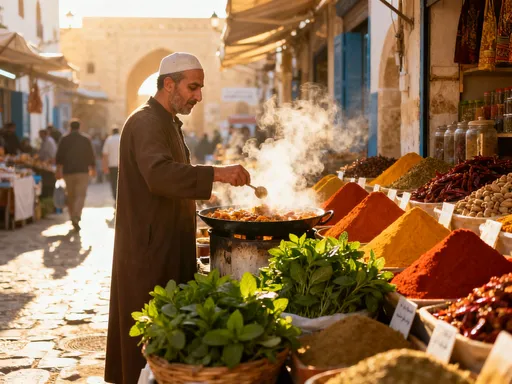
If you want to taste the soul of Kuching, skip the air-conditioned restaurants and head straight to the hawker centers. These open-air clusters of food stalls are where the city gathers to eat, gossip, and unwind. One of the most beloved is the Top Spot Food Court, a sprawling complex near the waterfront that comes alive at dusk. Dozens of stalls fire up their woks, sending plumes of smoke into the evening air. The seating is basic—plastic tables and stools under a tin roof—but the energy is electric. Families crowd around shared tables, office workers unwind after long days, and tourists brave the spice levels with cautious curiosity.
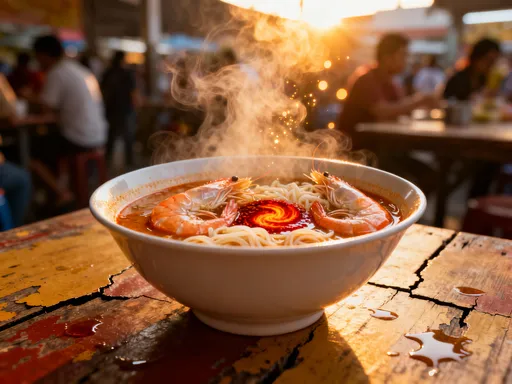
What sets places like Top Spot apart is their authenticity. These aren’t tourist traps with inflated prices and watered-down flavors. The customers are overwhelmingly local, and the dishes reflect real Sarawakian tastes—bold, complex, and unapologetically spicy. One stall, run by a woman named Aunty Lim for over twenty years, serves what many consider the city’s best Kuching Laksa. The broth is a masterful balance of coconut milk, tamarind, and a proprietary blend of ground spices that she refuses to name. It’s served with plump river prawns, soft rice noodles, and a single, shimmering spoonful of chili oil that transforms the dish from comforting to unforgettable.
Another hotspot is Carpenter Street, a narrow lane in the heart of the old town that transforms into a night market every evening. Here, you’ll find everything from grilled stingray wrapped in banana leaves to skewers of marinated chicken hearts. But the real draw is the kolo mee stands, where vendors toss springy egg noodles in a glossy mix of shallot oil, soy sauce, and minced pork. The best ones are quick, precise, and practiced—no frills, just perfection in a bowl. Watching the cooks at work is like witnessing a dance: chop, stir, toss, serve. Within seconds, another hungry customer is satisfied.
These hawker centers aren’t just places to eat—they’re community hubs. They operate on trust, rhythm, and reputation. A stall’s success isn’t measured by Instagram likes but by the length of the queue and the loyalty of regulars. And for visitors willing to sit on a plastic stool and embrace the chaos, they offer something far more valuable than convenience: a genuine taste of Kuching life.
Sarawak’s Secret: What Makes the Cuisine Unique
Kuching’s food stands apart from the rest of Malaysia not because of flashy techniques or exotic ingredients, but because of its deep cultural layering. The cuisine is a living mosaic shaped by the Iban, Malay, Chinese, and Bidayuh communities, each contributing distinct flavors, methods, and traditions. Unlike the more homogenized food scenes in Kuala Lumpur or Penang, Sarawakian cooking remains rooted in its indigenous foundations. This is a place where jungle herbs are still gathered by hand, where bamboo tubes double as cookware, and where meals are often tied to seasonal rituals and ancestral practices.
One of the most distinctive elements is the use of wild, foraged ingredients. The pencinta leaf, for example, is a bitter green commonly used in soups and stews. It’s not grown commercially but harvested from the forest, giving dishes a unique earthiness that can’t be replicated. Similarly, tapioca leaves—often mistaken for spinach—are boiled or stir-fried with anchovies and chilies, creating a dish that’s both nutritious and deeply satisfying. These ingredients aren’t novelties; they’re staples in rural households and increasingly appreciated in urban kitchens.
Another cornerstone of Sarawakian flavor is sambal belacan, a pungent paste made from ground chilies and fermented shrimp. It’s used as a condiment, a cooking base, and even a dipping sauce. Its sharp, umami-rich taste anchors many dishes, cutting through the richness of coconut milk or enhancing the sweetness of grilled meats. Equally important is the role of shrimp paste, which is roasted over charcoal before being ground into sauces. This process deepens its aroma and removes some of the raw intensity, making it more balanced and complex.
What makes these ingredients truly special is how naturally they’re integrated into daily life. A mother might add pencinta to her child’s soup for its health benefits. A grandmother might stir sambal belacan into a simple rice dish to make it more flavorful. These aren’t gourmet choices—they’re practical, cultural, and deeply ingrained. And for visitors, experiencing these flavors is like gaining access to a hidden layer of Sarawak’s identity.
Street Food Deep Dive: Must-Try Dishes and Where to Find Them
No visit to Kuching is complete without tasting kolo mee, the city’s most iconic noodle dish. Unlike the soupy versions found elsewhere, Kuching’s kolo mee is served dry—a tangle of springy egg noodles tossed in a glossy mix of shallot oil, dark soy sauce, and a touch of vinegar. Topped with slices of char siu (barbecued pork), minced pork, and a sprinkle of fried shallots, it’s a study in balance: savory, slightly sweet, and rich without being heavy. The best versions are found at open-air stalls near the Main Bazaar, where vendors have perfected the ratio of oil to sauce over decades. One stall, run by a man known only as Brother Tan, draws lines every morning. He refuses to expand, saying the dish loses its soul if made too quickly.
For something more rustic, seek out ayam pansuh, a traditional Iban dish where chicken is steamed inside a bamboo tube with lemongrass, ginger, and sometimes tapioca leaves. The bamboo imparts a subtle smokiness, while the steam locks in moisture and flavor. It’s not commonly found in city restaurants—most locals travel to rural homestays or attend cultural festivals to taste it. But during Gawai, the annual harvest celebration, some community centers open temporary kitchens to share the dish with visitors. The experience is as much about the setting as the food: sitting on woven mats, listening to gong music, and sharing meals with strangers who quickly feel like family.
Another bamboo-cooked specialty is manok pansi, a Bidayuh version of chicken stew. The preparation is similar—chicken, herbs, and water sealed in bamboo and cooked over fire—but the flavor profile is distinct. The Bidayuh often add turmeric and a local leaf called daun ubi, giving the broth a golden hue and a slightly peppery taste. It’s a dish of patience and care, requiring hours of slow cooking. Those lucky enough to try it often describe it as healing, not just physically but emotionally.
Other must-try dishes include Sarawak laksa, which differs significantly from its Penang counterpart. Here, the broth is creamy from coconut milk, tangy from tamarind, and layered with spices like coriander and fennel. It’s served with rice noodles, shredded omelet, and a few prawns, then finished with a spoonful of chili oil that carries a slow, building heat. Another favorite is midin, a jungle fern stir-fried with garlic and belacan. Crisp yet tender, it’s a reminder of how close Kuching remains to its natural surroundings.
Beyond the Plate: Food as Culture and Connection
In Kuching, food is never just about eating—it’s about belonging. This is especially true during Gawai, the annual harvest festival celebrated by the Iban and Bidayuh communities. Homes are opened to visitors, rice wine flows freely, and long tables are laden with dishes like ayam pansuh, sticky rice, and wild boar curry. What’s remarkable is how freely these meals are shared. Strangers are welcomed like relatives, offered seats, and encouraged to eat until they’re full. There’s no expectation of payment, no formality—just generosity.
This spirit of sharing extends to everyday life. Many family-run eateries have been operating for generations, with recipes guarded like heirlooms. Aunty Rosnah, who runs a small stall near the Central Market, learned to make kolo mee from her grandmother. She still uses the same wooden spoon and clay pot, insisting that metal changes the flavor. Her son now helps in the kitchen, and her granddaughter watches closely, already mimicking the way she tosses the noodles. These moments are quiet but profound—a lineage being passed down, one bowl at a time.
There’s also an unspoken etiquette around food that speaks volumes about local values. Finishing your plate isn’t just polite—it’s a sign of respect. Wasting food is seen as disrespectful to the cook and the ingredients. When offered tea, it’s customary to accept, even if just a small sip. And saying terima kasih—thank you—isn’t perfunctory; it’s heartfelt. These small gestures build trust and connection, turning a meal into a shared experience.
For visitors, embracing these customs can transform a simple lunch into a meaningful encounter. It’s not about performing local behavior but about showing appreciation. When you eat like a local, you’re not just tasting food—you’re participating in a culture that values community, memory, and generosity above all.
Smart Eating: Navigating Hygiene, Timing, and Etiquette
For many travelers, especially those new to street food, questions about hygiene are natural. The good news is that in Kuching, the busiest stalls are often the safest. High turnover means ingredients are fresh, and constant use keeps equipment clean. A simple rule of thumb: if there’s a queue, it’s probably good. Look for vendors who handle money and food separately, use clean utensils, and keep their workspace tidy. Many experienced eaters also watch how locals behave—if families with children are dining there, it’s usually a reliable sign.
Timing matters too. Some dishes are best enjoyed at specific times of day. Nasi lemak, for example, is a popular morning meal, often sold from roadside carts before 10 a.m. The coconut rice is freshest then, and the sambal hasn’t lost its punch. Kolo mee is another breakfast favorite, though it’s available throughout the day. For late-night cravings, head to the grilled fish stalls along the riverfront. Whole fish are marinated in turmeric and chili, then grilled over charcoal and served with a spicy dipping sauce. The smoky aroma alone is enough to draw a crowd.
As for etiquette, the basics go a long way. Most food is eaten with a spoon and fork—the spoon is the primary utensil, used to scoop and mix. Chopsticks are common for noodles but not required. If offered a drink, especially tea or water, accept it as a sign of goodwill. And don’t be surprised if the vendor chats with you while cooking; many see their stall as an extension of their home. A friendly smile and a simple terima kasih can open doors to richer conversations.
For those concerned about spice levels, don’t hesitate to ask for “less spicy” or “no chili.” Most vendors are happy to adjust. And if you’re unsure what to order, point to what someone else is eating—locals usually smile and nod. The goal isn’t perfection; it’s participation.
Why Kuching Deserves a Spot on Every Food Traveler’s List
When compared to better-known food destinations like Penang or Kuala Lumpur, Kuching often flies under the radar. But that’s precisely what makes it so special. There’s no need to hunt for hidden gems—here, every corner offers something authentic. While other cities have adapted their cuisines for mass appeal, Kuching has held onto its roots. The food isn’t staged for photos or tailored for foreign palates. It’s lived, real, and deeply personal.
There’s also a slower pace to eating in Kuching. Meals aren’t rushed. Conversations linger. Vendors remember regulars by name. This isn’t fast food; it’s food with memory. A bowl of laksa might contain a recipe older than the cook, passed down from a grandmother who once made it over an open fire. A plate of kolo mee might be the result of fifty years of refinement, perfected through daily practice. In a world of culinary trends and viral dishes, Kuching offers something rare: continuity.
For food travelers seeking more than just flavor—those who want connection, story, and authenticity—Kuching is a revelation. It doesn’t need flashy restaurants or celebrity chefs. Its power lies in its simplicity, its generosity, and its unwavering commitment to tradition. Every meal feels like an invitation to sit down, listen, and belong.
Kuching doesn’t shout about its flavors—it lets them speak for themselves. This city’s food culture isn’t performative; it’s lived, shared, and deeply rooted in community. Every meal feels like an invitation, not just to eat, but to belong. For travelers craving authenticity, connection, and unforgettable taste, Kuching isn’t just worth a visit—it’s essential. So pack your appetite. The table’s already set.