You Won’t Believe How Alive Monaco’s Cityscape Feels at Dawn
Monaco isn’t just luxury yachts and grand prix circuits—it’s a city that breathes energy from every cobblestone and cliffside corner. I wandered its streets from sunrise to midnight, and what I discovered was more than glamour: it was soul. The way the light dances on the Mediterranean, the hum of life in narrow alleyways, the seamless blend of old-world charm and futuristic elegance—it all comes alive in ways you have to see to believe. This is not just a destination; it’s a feeling in motion. In those quiet first hours, when the world is still soft with morning mist and the city stirs beneath a pale gold sky, Monaco reveals itself not as a playground for the elite, but as a place with rhythm, warmth, and surprising intimacy. It’s a microstate that pulses with life far beyond its half-mile coastline.
First Light Over Monte Carlo: A City Waking Up
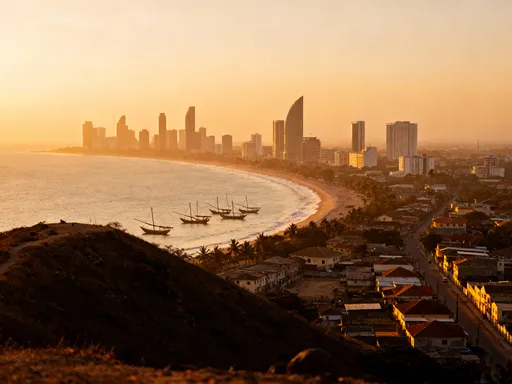
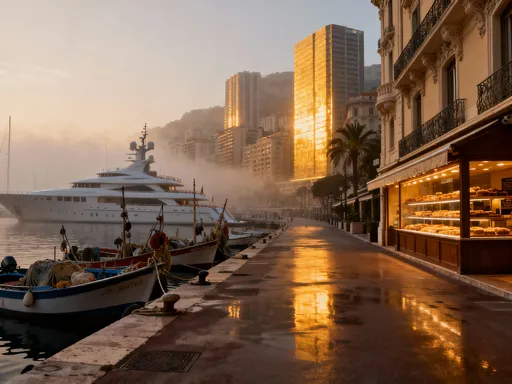
As dawn breaks over the Baie de Monte Carlo, the city emerges from shadow like a carefully kept secret finally shared. The harbor, usually a glittering stage for private superyachts, begins the day with a quieter performance. Local fishing boats—small, weathered vessels with names painted in bold cursive—glide in with the tide, their decks glistening with seawater and the morning’s first catch. Nearby, million-dollar motor yachts rest silently, their polished decks reflecting the soft pink and lavender hues of the sky. The contrast is striking, yet harmonious: one speaks of tradition and labor, the other of luxury and leisure, both coexisting in the same protected bay.
The air carries a clean, briny freshness, tinged with the scent of pine from nearby hills and the unmistakable aroma of freshly baked baguettes wafting from corner bakeries. In the early stillness, before traffic hums and tour groups gather, the streets of Monte Carlo feel almost private. A lone jogger passes the Casino de Monte-Carlo, its ornate façade glowing in the gentle light. A café owner arranges chairs outside his shop, the clink of porcelain a quiet overture to the day. Even the palm trees seem to stretch in slow motion, their fronds brushing against the pale blue sky.
This is when Monaco feels most authentic—not as a postcard, but as a living city. The grand architecture, often photographed in midday glare, takes on a softer character. Belle Époque buildings with wrought-iron balconies and pastel facades absorb the dawn like warm breath. Modern glass towers, designed to mirror the sea and sky, shimmer with a subtlety that daytime brightness often obscures. In these first hours, the city’s dual identity becomes clear: it is both exclusive and accessible, opulent yet grounded in daily rituals that belong to its residents, not just its visitors.
Walking the Ridge: The Vertical Drama of Monaco’s Layout
One of Monaco’s most defining features is its dramatic elevation. Built along a narrow strip of Mediterranean coastline and climbing sharply into the hills, the city unfolds in layers, each level offering a new perspective. To walk through Monaco is to move vertically as much as horizontally—ascending staircases, traversing sky bridges, or gliding between districts via public elevators that whisk you from sea level to residential plateaus in under a minute.
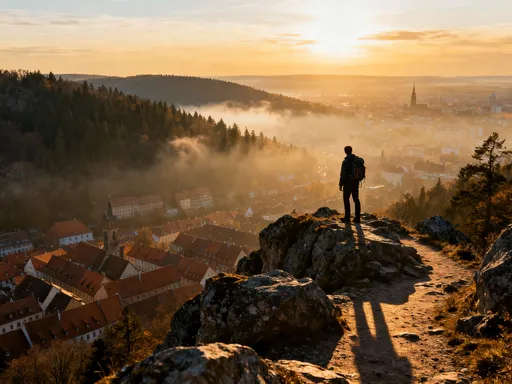
The journey from La Condamine, the bustling port district, to the quieter residential zones above Monte Carlo is a study in urban choreography. As you climb, the sounds of the harbor—the creak of moored boats, the distant beep of forklifts unloading cargo—gradually give way to birdsong and the whisper of wind through olive trees. The air grows cooler, the views wider. From mid-slope pathways, you can see the entire arc of the bay, the city cascading down to the water like a stone amphitheater embracing the sea.
Key vantage points, such as the Jardin Exotique, perched on a limestone cliff, offer breathtaking panoramas. Here, succulents and drought-resistant plants thrive in terraced beds, their sculptural forms echoing the angular beauty of the city below. The garden itself is a marvel of engineering, carved into the rock face, with walkways suspended over sheer drops. Yet it remains fully accessible, with elevators and ramps ensuring that breathtaking views are not reserved for the physically able alone.
This verticality shapes the rhythm of daily life. Residents on upper levels enjoy privacy and panoramic vistas, while those near the port benefit from proximity to markets, transport, and the sea. The city’s design respects its geography rather than fighting it, creating a layered experience that rewards exploration on foot. Each ascent reveals a new facet—whether it’s a hidden courtyard, a quiet chapel, or a balcony spilling over with bougainvillea—reminding visitors that Monaco is not just a destination to be seen, but a place to be felt, level by level.
Between Old and New: Architectural Contrasts That Tell a Story
Monaco’s skyline is a dialogue between centuries. The Prince’s Palace, with its terracotta roofs and baroque detailing, stands as a sentinel of history in the old town of Monaco-Ville, perched high on a rocky promontory. Just a short walk away, sleek glass towers rise with minimalist precision, their reflective surfaces capturing the ever-changing light of the Mediterranean. Rather than clashing, these styles engage in a quiet conversation, each enhancing the other through contrast.
The Saint Nicholas Cathedral, where Prince Rainier and Grace Kelly were married, exemplifies the principality’s reverence for tradition. Built in the late 19th century in a Romanesque-Byzantine style, its cream-colored stone and rose window radiate a serene dignity. Nearby, the modern extension of the Hôtel de Paris—a luxury landmark since 1863—demonstrates how preservation and innovation can coexist. The addition, completed in recent years, features a curved glass façade that subtly mirrors the curves of the original building, blending contemporary design with historical context.
Place d’Armes, the main square of Monaco-Ville, is another example of thoughtful urban evolution. Once a military parade ground, it is now a vibrant public space surrounded by cafés, boutiques, and the Ministry of State. The buildings retain their classical proportions and stonework, yet house modern amenities and services. This balance extends throughout the city: historic façades are meticulously maintained, while interiors are updated for contemporary living. Even new constructions are subject to strict design guidelines ensuring they complement, rather than dominate, the existing streetscape.
This architectural harmony reflects a deeper philosophy—one of continuity and care. Monaco does not erase its past to make way for the future; instead, it layers the new upon the old with intention. The result is a city that feels both timeless and current, where a grandmother might buy herbs at a market stall beneath a balcony where a tech entrepreneur sips espresso on a smart-device-controlled terrace. The city’s built environment tells a story of respect—for heritage, for beauty, and for the people who live within it.
The Pulse of Daily Life: Markets, Cafés, and Local Rhythms
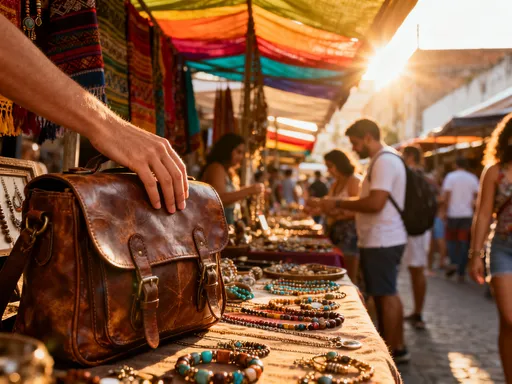
Beyond the glamour and grandeur, Monaco’s true character reveals itself in the rhythm of everyday life. At the Marché de la Condamine, held every morning in the heart of the port district, locals gather not for spectacle, but for sustenance. Stalls overflow with ripe figs, sun-warmed tomatoes, fragrant herbs, and wheels of goat cheese dusted with ash. Fishmongers display sea bream, octopus, and anchovies, their catch laid out on beds of ice with surgical precision. The market is a symphony of voices—French, Italian, Monegasque—rising and falling in animated exchange.
Cafés along Rue Grimaldi and Avenue Prince Albert II open early, their outdoor tables filling with residents enjoying morning coffee and a croissant. The pace is unhurried. A woman reads a newspaper, a man chats with the barista, a child nibbles a pain au chocolat. These moments are unremarkable in the best possible way—ordinary, human, and deeply grounding. They remind visitors that Monaco is not just a backdrop for luxury, but a home for over 38,000 people who live, work, and raise families here.
Commuting in Monaco is an experience in efficiency and convenience. The city’s network of free public elevators—some enclosed, others open-air—connects the lower and upper levels seamlessly. A resident might take Elevator No. 4 from the Port to the Boulevard des Moulins in seconds, stepping out beside a pharmacy or a florist. The compact bus system, operating on clean electric and hybrid vehicles, circles the principality with reliability, making car ownership optional even in a city known for high-end automobiles.
Social interaction here is polite but warm. Strangers exchange polite greetings—Bonjour, bonsoir—with a formality that feels respectful rather than distant. Shopkeepers remember regular customers; neighbors chat across balconies. There is a sense of community that belies the city’s reputation for exclusivity. Wealth is visible, yes, but it does not define the social fabric. Instead, daily life unfolds with a quiet dignity, shaped by Mediterranean customs, a strong work ethic, and a deep appreciation for quality—whether in food, design, or human connection.
Nightfall on the Waterfront: When the City Transforms
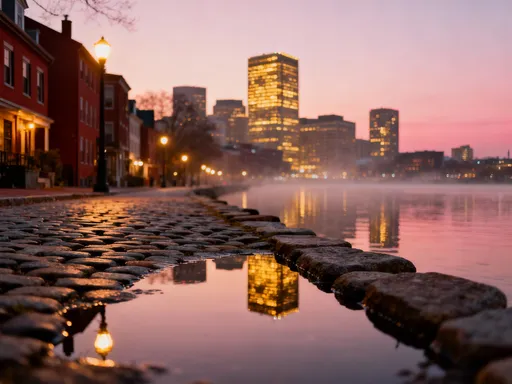
As the sun dips below the western horizon, Monaco undergoes a quiet metamorphosis. The golden light that bathed the city at dawn returns in a warmer, richer tone, gilding the façades of buildings along the port. Streetlamps flicker on, their glow reflecting in the still waters of Port Hercules. The marina, already a masterpiece of engineering and design, becomes a canvas of light—yachts illuminated from below, their names glowing in elegant script, while the city’s landmarks—the opera house, the casino, the palace—stand out in carefully calibrated illumination.
The Formula 1 track, usually a ribbon of asphalt winding through the city, takes on a new character at night. Without the roar of engines, it becomes a promenade for evening strolls. Families walk hand in hand, couples pause to watch the boats, and tourists snap photos of the illuminated skyline. The grandstands, stripped of their race-day frenzy, look almost elegant in the soft light, their metal frames casting delicate shadows on the pavement.
Alfresco dining brings another layer of warmth to the evening. Restaurants along the seafront set tables close together, their candlelight flickering in the breeze. The scent of grilled fish, lemon, and thyme fills the air. Conversations hum in multiple languages, rising and falling like the tide. There is no need for loud music or flashy signs—the city itself is the entertainment. Even the sidewalks seem to glow, paved with light-reflective stone that enhances visibility while adding to the ambiance.
What makes this transformation so compelling is not just the beauty, but the accessibility. Unlike other cities where nighttime glamour feels exclusive, Monaco’s evening charm is open to all. You don’t need a reservation at a Michelin-starred restaurant to enjoy the view. A gelato from a corner shop, a bench by the water, and a clear sky are enough. The city at night does not shut out the observer—it invites you in, offering a sense of belonging even to those just passing through.
Smart Navigation: Moving Through the Microstate with Ease
One of the greatest advantages of visiting Monaco is its scale. Covering less than two square kilometers, the entire principality can be traversed on foot in a single day. This compactness is not a limitation, but a gift—it allows for deep, immersive exploration without the fatigue of long commutes or complex transit systems. The city is designed for walking, with wide sidewalks, gentle gradients where possible, and frequent rest points offering benches and shade.
For vertical movement, Monaco’s free public elevators are a marvel of urban planning. Strategically placed throughout the city, they connect key districts with minimal effort. The most famous, the Monte Carlo Ascenseur, links the train station and port area with the upscale shopping streets above. Others, like the Elevator de la Rue du Gabian, offer panoramic views during the ascent, turning practical transit into a scenic experience. These elevators are not afterthoughts—they are integral to the city’s identity, ensuring that mobility is inclusive and effortless.
The bus system, operated by Compagnie des Autobus de Monaco (CAM), complements walking perfectly. With routes circling the principality and connecting to neighboring French towns like Cap-d’Ail and Menton, the buses are clean, punctual, and affordable. Many are electric or hybrid, aligning with Monaco’s commitment to sustainability. For visitors, a single ticket or day pass offers unlimited rides, making it easy to hop on and off at key attractions without relying on taxis or rental cars.
Navigating Monaco also means embracing slowness. There is no need to rush. The city rewards mindful wandering—pausing to admire a garden, following a side street that leads to a hidden terrace, or sitting quietly to watch the light change over the water. Maps are helpful, but intuition is just as valuable. With so much within reach, the best discoveries often come from getting slightly lost, then finding your way back with a new perspective. In a world that often prioritizes speed, Monaco offers a rare invitation: to move gently, to observe closely, and to experience a place not as a checklist, but as a living, breathing whole.
Why This Cityscape Stays With You
Long after the trip ends, Monaco lingers in memory not for its wealth, but for its harmony. It is a place where nature and architecture exist in delicate balance, where steep cliffs meet calm waters, and where every building seems to respect the light, the view, and the person walking past. The city’s magic lies in its ability to feel both grand and intimate, luxurious and livable, timeless and modern—all at once.
What stays with you is not the price of a yacht or the name of a hotel, but the way the morning sun hits a cobblestone street, the sound of a market vendor calling out the day’s catch, the effortless glide of an elevator rising through the hills as the sea sparkles below. It is the feeling of being both a guest and a participant, of witnessing a way of life that values beauty, order, and quiet dignity.
Monaco challenges assumptions. It is easy to dismiss it as superficial, a playground for the rich. But those who take the time to walk its streets at dawn, to chat with a shopkeeper, to sit by the water at dusk, discover something deeper—a city that cares for its people, its history, and its environment with uncommon attention. It proves that even in a place of privilege, authenticity can thrive when design serves humanity, and when progress honors the past.
To experience Monaco is to recalibrate your expectations of what a city can be. It invites you not to gawk, but to observe; not to envy, but to appreciate. Its cityscape stays with you because it feels alive—not in the chaotic way of a metropolis, but in the steady, graceful rhythm of a place that knows itself deeply. And perhaps, in that knowing, it helps you see your own world a little more clearly. So go. Walk its ridges, breathe its sea air, and let the dawn show you a side of Monaco no headline ever captures. You may find, as many do, that the smallest country on the planet leaves the largest impression.